Like any other blocks, Anchor Stones can be used to build free-form structures or play simple stacking games and exercises. Free-form play is perhaps the best way to get acquainted with the stone blocks and the different block sizes. The blocks are manufactured so that different combinations add up to the same length and height and the arches and other features match the dimensions of the base stones.
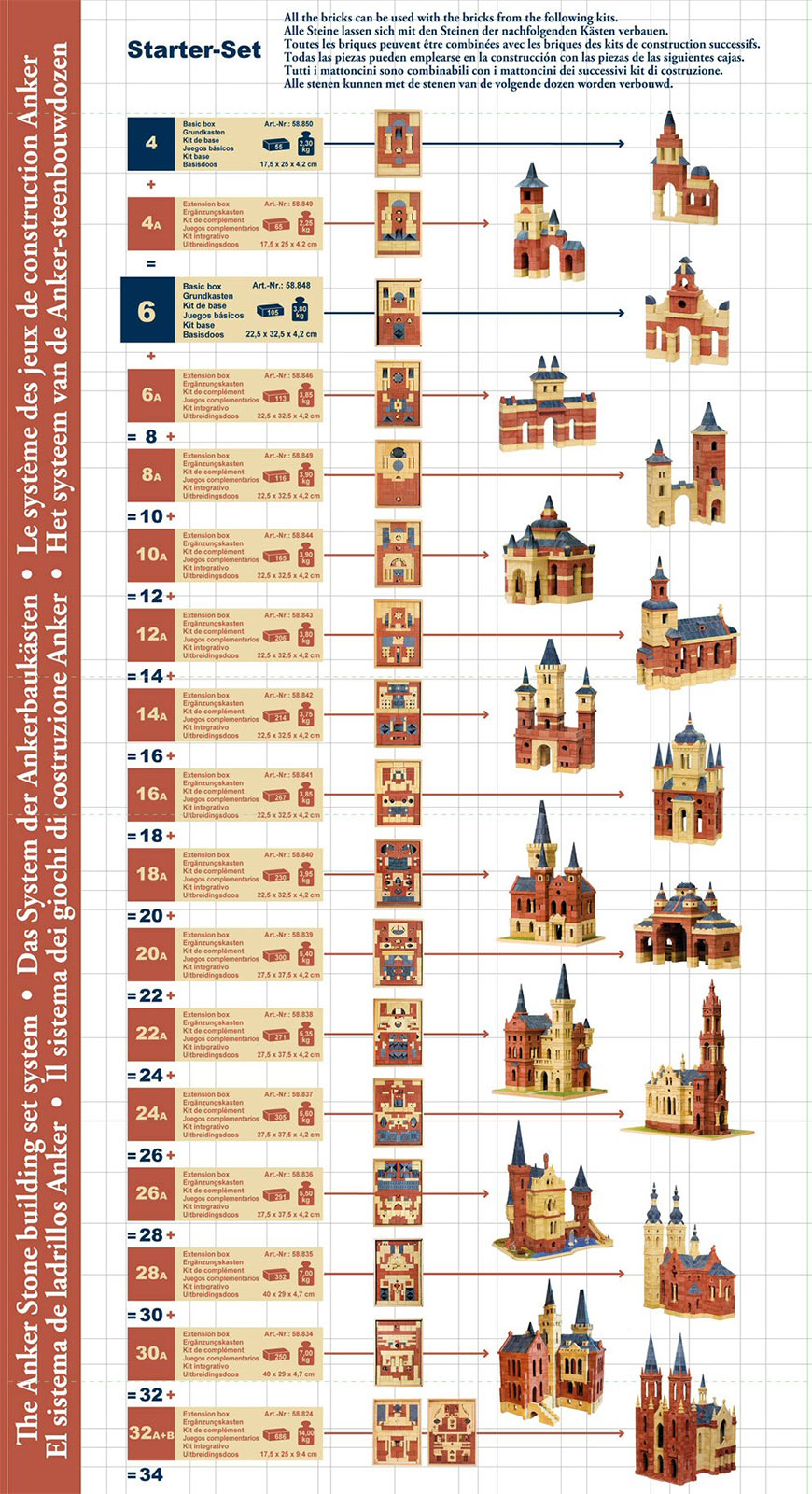
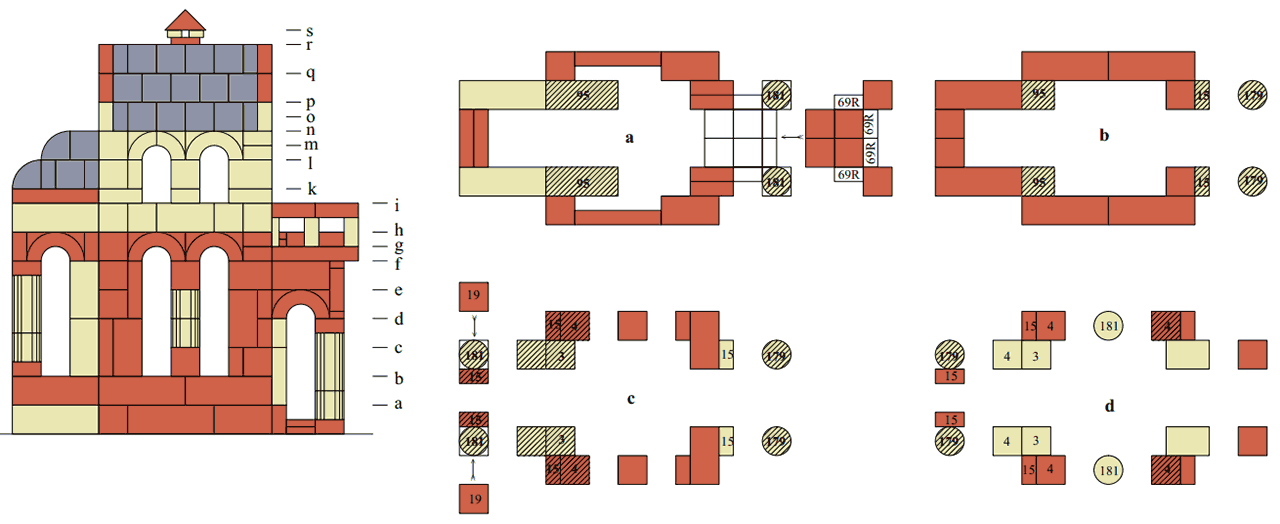
Every classic Anchor Stone architectural block set includes templates for building structures. But for these templates to be useful, you must purchase sets in order as shown in the table below. Always begin by purchasing a starter set. Templates included in the extension sets require blocks from lower numbered sets. All of the extension sets build on the starter sets progressively as follows:
| Starter Set | Extension Set | Together Become |
|---|---|---|
| Basic set 2 | + 2A | Basic set 4 |
| Basic set 4 | + 4A | Basic set 6 |
| Basic set 6 | + 6A | Set 8 |
| + 8A | Set 10 | |
| + 10A | Set 12 | |
| Continuing in this fashion… | ||
| + 26A | Set 28 | |
| + 28A | Set 30 |
Note that you can start with any of the basic sets and continue from there. The lower the basic set number, the lower the entry cost and the fewer stones provided.
For example, to be able to build with set 12, you would purchase a starter basic set 6, and extension sets 6A, 8A, and 10A. The building instructions included with set 10A assume you have purchased all of the sets before in the progression.
There are also additional building plans available and these plans will reference, for instance, set number 14. This means that in order to use the building plan, you must have all of the stones from the progression towards set number 14.