
Testifying before the Senate Finance Committee on July 22, Jamieson Greer, the U.S. trade representative (USTR), told Congress: “The specific authorities this administration is using have changed, but the trade strategy has not. We are committed to continuing to use tariffs and to negotiate deals to support the reindustrialization of our economy, protect American workers and increase their wages and shrink our trade deficit.” Unfortunately, this pursuit uses broad strokes to accomplish reindustrialization which treats businesses where reshoring is possible the same as businesses where it is not. Anchor Stones will not be made in America.
For several months, I had worked with the USTR to find practical ways that small specialty importers like euroSource could continue operating while supporting the Administration’s broader trade objectives. At USTR’s request, I and a coalition of specialty toy companies and industry organizations submitted Harmonized Tariff Schedule (HTS) classifications covering our products. Around the time the Supreme Court struck down IEEPA tariffs, the USTR went silent and the work of identifying tariff classifications had reached a dead end.
That experience changed my thinking. Rather than searching for relief through individual HTS codes, I became convinced that a commercial de minimis exemption offered a far better solution—one that would preserve the Administration’s efforts to close the retail de minimis loophole while allowing legitimate commercial shipments for American small businesses to continue. The solution addresses both tariffs on goods that cannot be reshored and the enormous increases in logistics costs brought about by the Administration’s trade policies.
With the IEEPA mechanism gone, and a temporary pivot to Section 122 in place, the USTR launched its Section 301 forced labor investigation. I saw an opportunity to present what had become a two-pronged approach.
First, countries that already maintain and enforce robust forced labor protections should not be subject to tariffs intended to change behavior they have already addressed. Germany, where Anchor Stone has been manufactured for generations, has some of the world’s strongest supply chain due diligence requirements that proactively work to eliminate forced labor. The USTR grouped Germany with the wider EU, ignoring their efforts and assigned a 10% tariff.
Second, a complementary commercial de minimis recognizes that small commercial imports are fundamentally different from high-volume retail shipments and allows tariff free entry for low volume product that cannot be reshored. It is a future-proof solution that allows the Administration to modify tariff policy and mechanisms while preserving small businesses.
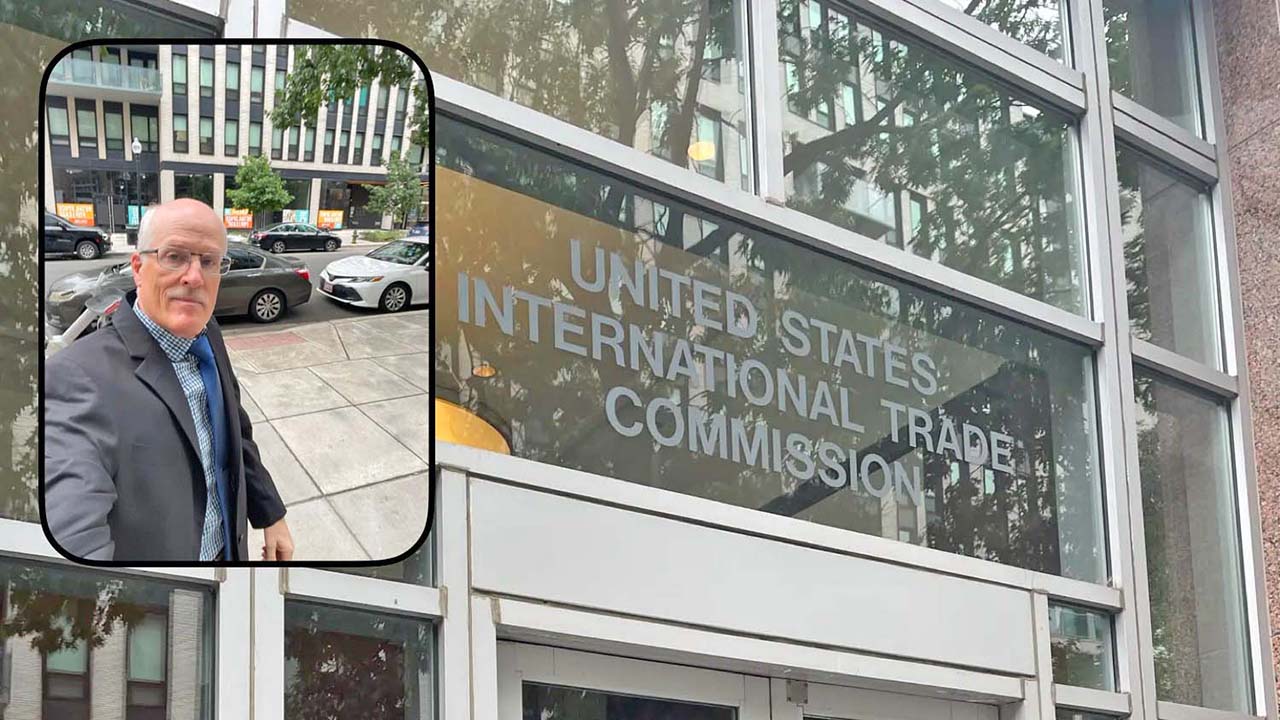
Those ideas formed the basis of my oral testimony before the Section 301 Committee on July 9th. (https://www.eurosourcellc.com/2026/07/ustr-section-301-forced-labor-testimony/)
The challenge here for preserving access to Anchor Stones is not the goal of reindustrialization itself. It is recognizing that not every imported product competes with American manufacturing – it is ridiculous to expect to reshore everything. Some imports simply enable American small businesses to exist and provide access to culturally unique products. Effective trade policy should and must recognize that distinction.